Home Why We Exist For Business Owners Cost Mapping Contact Get in Touch
EN | HR

Cost mapping: what it is and why it matters

Cost mapping is the process of identifying and assigning every cost associated with producing a specific product or delivering a specific service. For most small business owners, doing this for the first time is genuinely eye-opening.

Why most small business prices are set without full information

When a sole trader starts a business, pricing is usually handled by one of two methods. Either they look at what competitors charge and match or slightly undercut, or they estimate their main material cost and add a margin that feels reasonable. Both approaches have the same weakness: they do not account for the full range of costs that the business actually incurs.

The costs that get missed are rarely dramatic. They are small, recurring, and spread across many categories. A portion of the monthly electricity bill. The time spent ordering supplies. The fuel used driving to pick up materials. The wear on equipment. The cost of packaging that nobody counted. Individually, each of these is minor. Together, they can represent a significant portion of the true cost of each unit produced or each service delivered.

The result is that many businesses are profitable on paper but not in practice, or are genuinely profitable but have no way to know it, or are running at a loss without realising it. Cost mapping addresses all three situations by making the full picture visible.

Business owner reviewing cost documents in a workshop setting

The costs that are easiest to miss

These categories appear in almost every business we visit. They are almost never included in informal price calculations.

01

Consumables nobody tracks

Cleaning products, paper towels, printer ink, packaging tape, rubber gloves, disposable covers. These are purchased irregularly and never assigned to a specific product or service. They have a real cost per unit.

02

Spoilage and waste

In food production, a portion of every ingredient is wasted in preparation. In craft production, materials are cut, trimmed, or rejected. This waste has a cost that must be distributed across the units that are actually sold.

03

Equipment depreciation

Every piece of equipment will eventually need to be replaced or repaired. The cost of that future replacement is a real cost of every unit produced today. It is rarely calculated explicitly.

04

Non-billable time

For every hour spent on a billable job, there are additional hours spent on purchasing, administration, client communication, cleaning, and maintenance. These hours represent a real cost that must be recovered somewhere in the pricing.

How cost mapping is actually done

Cost mapping starts with a complete list of every cost the business incurs, organised by category. Each cost is then examined to determine how it relates to the production or delivery of each product or service type. Some costs are direct, meaning they vary directly with production volume. Others are indirect, meaning they are fixed or semi-fixed and must be allocated across all output.

Complete cost inventory

Every cost the business incurs is listed, regardless of how it is currently tracked or categorised. Nothing is excluded at this stage.

Cost allocation

Each cost is allocated to products or services based on how it is actually consumed. Direct costs go directly. Indirect costs are allocated by a rational method such as time or volume.

Unit cost calculation

All allocated costs are summed to produce a total cost per unit for each product or service type. This is the number that pricing decisions should start from.

Sensitivity review

We identify which cost categories have the largest impact on the total, so you know where to focus attention if costs change in the future.

What the finished cost model looks like

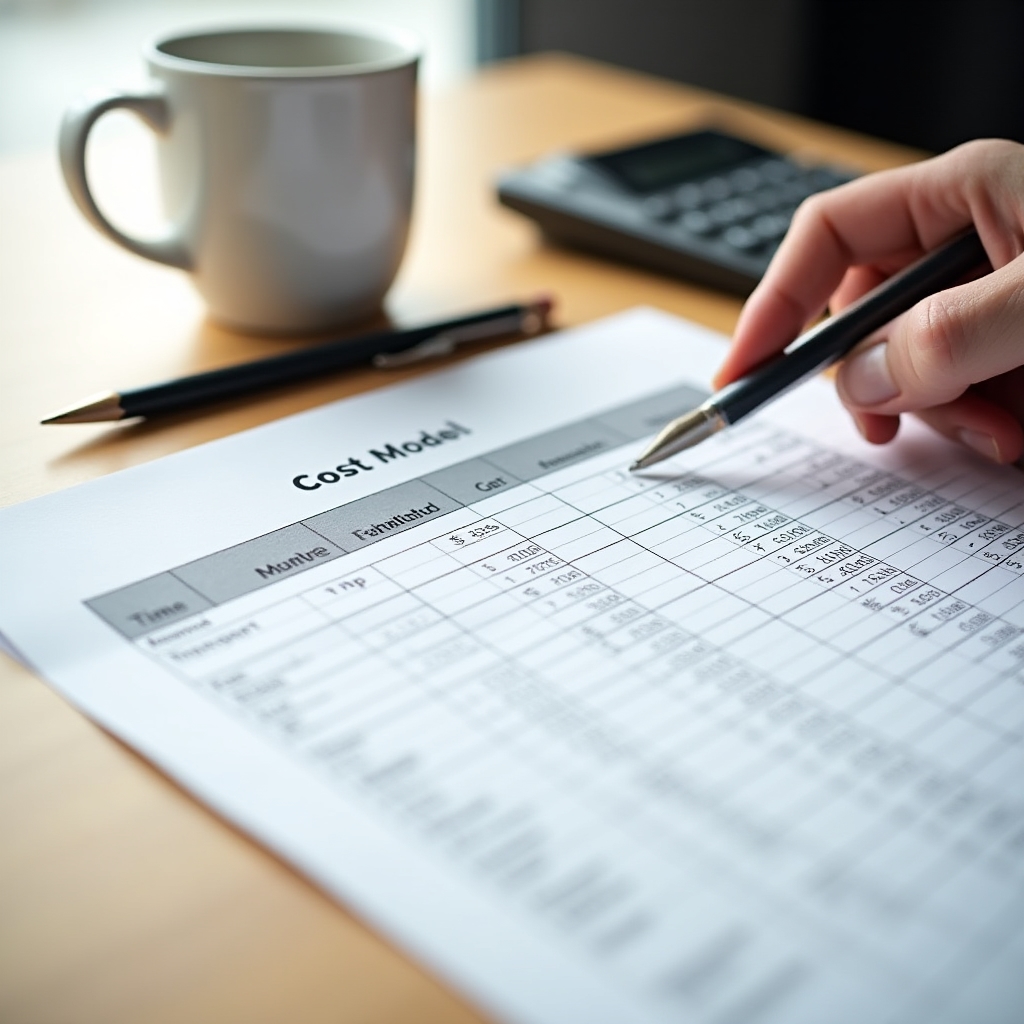
Finished cost model document on a desk showing clear cost breakdown per product

The finished model is a simple document, typically a spreadsheet or printed table, that shows for each product or service type:

  • A list of all cost categories that apply
  • The cost per unit in each category
  • A total cost per unit
  • The current price charged (if applicable)
  • Notes on assumptions and how to update figures as costs change

The model is designed to be used and updated by the business owner independently. We explain every figure during the handover session and make sure you understand how each number was arrived at.

Discuss Your Business

Want to know the real cost of your work?

Contact us to arrange an initial conversation. We will discuss your business and explain what a cost mapping consultation would involve.

Contact Us